What history can still teach us about work today
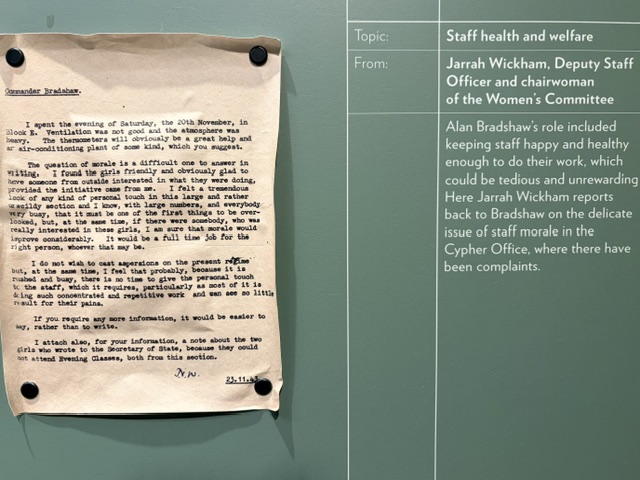
I recently read an internal memo about the conditions in an organisation I was visiting. It described a department with…


AI adoption in the workplace in 2026 is no longer speculative. Tools are being introduced, workflows adjusted, and expectations quietly reshaped. What is becoming clear is that technology is moving faster than organisations’ ability to lead the human side of change.
This article is the fourth in a short series examining five workplace trends shaping culture, leadership, teams, resilience, and performance in 2026. It looks at AI not as a technology story, but as a test of leadership, trust, and change capability in already stretched systems.
AI is now a practical reality in many workplaces. Managers are being asked to integrate new tools while maintaining performance. Teams are expected to adapt in real time. In many cases, people are left to make sense of the implications with limited guidance.
Research consistently shows that many employees are open to using AI at work and, in some cases, actively want to. Where adoption stalls, it is often not because of resistance, but because people lack clarity about how tools should be used, what is expected, and how their roles may change.
In 2026, the challenge is less about the volume of change and more about change capability. The question is whether AI is integrated in ways that build trust, skill, and confidence, or whether it adds to uncertainty and pressure.
A growing risk is the emergence of an AI leadership gap. Senior leaders are more likely to believe their organisation has communicated clearly about AI’s impact, while early-career employees and frontline teams report far less certainty.
Where there is a lack of clarity, people fill the vacuum with assumptions, anxiety, or avoidance. Some over-rely on tools they do not fully understand. Others hold back, unsure what is safe or valued. Neither response builds capability.
Many leaders mistakenly treat AI primarily as a technology or efficiency initiative. Organisations focus on tool selection and rollout speed, assuming benefits will follow automatically.
In practice, poorly handled implementation often creates confusion, inconsistent adoption, and mistrust, particularly when employees feel decisions are being made without regard for their work or development.
AI changes how judgement is exercised, how tasks are distributed, and how people understand their own value. When those shifts are left implicit, people experience change as something happening to them rather than with them.
In 2026 organisations must treat AI adoption as a leadership and change capability issue.
Leaders explain not just what tools are being introduced, but why, and how success will be judged. Managers are supported to have informed conversations about impact and expectations. Skill development is treated as integral to implementation, not an afterthought.
This is slower than a technical rollout. It is also far more effective.
How change is led matters as much as what is changing. When clarity and trust are missing, even well-intended initiatives increase pressure rather than capability.
AI exposes how change is really handled inside an organisation.
Where leaders are clear, honest about uncertainty, and willing to involve people early, AI becomes a shared learning curve. Teams experiment, ask questions, and build confidence together. Mistakes are treated as part of adaptation, not as failure.
Where leadership is distant or opaque, AI becomes something done to people. Rumour fills the gaps left by silence. People hedge, delay, or quietly disengage. The technology may be in place, but capability never fully forms.
In that sense, AI is less a test of digital maturity and more a test of leadership maturity. It shows whether an organisation can carry change without eroding trust, or whether every new initiative quietly adds to fragility.
The final article in this series looks at where these pressures ultimately show up most clearly, at team level, through performance and day-to-day judgement.