What history can still teach us about work today
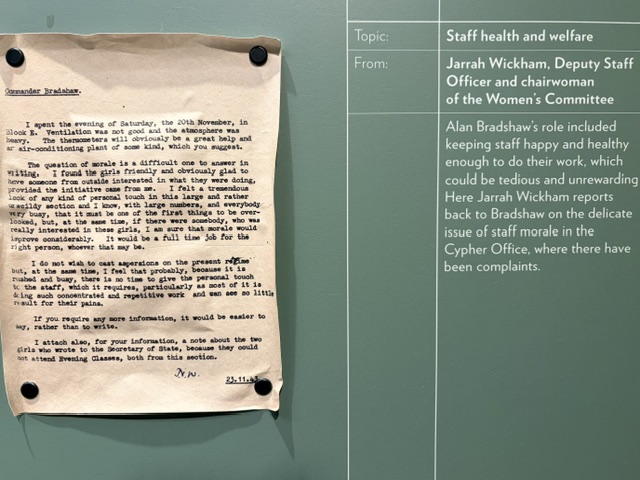
I recently read an internal memo about the conditions in an organisation I was visiting. It described a department with…


Learning how to create psychological safety at work is something most leaders think they understand — until you ask them what they’re actually doing about it.
I have a lot of conversations with leaders about psychological safety and whilst most of them can tell me what it is, not so many can tell me how they’re actually creating it.
When I ask “what are you doing, specifically, to build it in your team?”, the conversation tends to get a little vague.
I don’t mean that as a criticism. It reflects something about how the term psychological safety has entered the leadership conversation but the method for creating it is largely missing.
Psychological safety has become prominent over the last decade, turbocharged by Google’s Project Aristotle in 2016, which found it was the single most important factor in high-performing teams.
Amy Edmondson’s original definition – a belief that the team is safe for interpersonal risk-taking, for admitting mistakes, asking for help, speaking up – is important. The problem is that organisations have tended to treat psychological safety as something you can generate through workshops, values statements, and the right leadership tone but you can’t simply announce that this is now a psychologically safe environment and have it be true.
My own thinking on this has been shaped by experience, by research, and by working with leaders and teams over a number of years. A recent episode of Bruce Daisley’s Eat Sleep Work Repeat podcast pushed that thinking in a different direction.
Prompted by a post from Professor Rob Briner about the difficulty of creating psychological safety on demand, Bruce was interviewing Professor Katrien Fransen, a leadership researcher at KU Leuven. What she shared offers something the conversation has, for me, largely been missing – a mechanism.
Working with 289 handball players across 30 teams, Fransen and her colleagues tested a model that mapped the relationships between identity leadership, team identification, psychological safety, and a range of performance and wellbeing outcomes.
She found that when leaders demonstrate what she calls identity leadership – actively building a sense of “we” and “us” within the team – players identify more strongly with that team and it’s that shared sense of belonging that generates psychological safety as opposed to the other way around.
The logic is that when you feel that you genuinely belong to a group – that you have something in common with the people around you and that you’re all pulling in the same direction – the risk calculation changes. Admitting you don’t know something, flagging a concern, pushing back on a decision: all feel less threatening when the people you’re doing it in front of feel like your people. The research found that psychological safety then flows into two directions from there: a team pathway (better teamwork, more resilience, higher performance satisfaction) and an individual pathway (less burnout, better health).
For leaders who’ve been wondering why their attempts to create psychological safety haven’t stuck, this is worth thinking about. The culture workshops and the “it’s safe to speak up” messages aren’t wrong exactly but they’re downstream of something that hasn’t been established yet.
There’s a second finding that matters particularly for managers – the people most likely to be held responsible for creating psychological safety in the first place.
Across thousands of players and coaches, Fransen’s team found that in only 1% of teams was the appointed captain actually the best leader across all four leadership functions the research measured: task leadership, motivational leadership, social leadership, and external representation. In nearly half of teams, the captain wasn’t perceived as the best leader in any of those areas.
In the podcast Fransen is careful not to make this a story about bad captains. The point is structural. We load too much onto one person, and then we pick the wrong person anyway, often based on tenure or relationships rather than their capacity to bring a team together.
The implications for organisations are obvious. The people who actually hold a team together rarely have a formal title. They’re the ones others turn to in a crisis, who set the tone in the room, who make the new starter feel like they belong – and their influence is almost never formally recognised. In Fransen’s research, the influence of informal leaders on team outcomes was up to ten times greater than that of the coach or captain. Ten times.
If Fransen’s research is right, then building psychological safety starts with building shared identity which is something leaders can actually work on. Here are three places to start.
1. Identify what makes your team your team. Not the aspirational version – not the values on the wall – but the actual norms your team holds each other to. What do people here genuinely care about? What would feel like a betrayal of the group? This isn’t a team-building exercise. It’s the raw material of shared identity.
2. Stop trying to create safety and start creating belonging. This is the reframe that matters most. If someone doesn’t feel like they’re genuinely part of the team – if they feel like a contractor, a new starter or an outsider – no amount of “it’s safe to speak up here” will change how they feel. The start point to psychological safety is a felt sense of being part of the team. Everything else follows from that.
3. Find out who your informal leaders – your cultural architects – are. Ask your team informally and individually who they turn to when something is difficult, who lifts the mood, who makes people feel like they belong. The answers may be surprising, but they point to where the real cultural influence lives in a team. Once you know who they are, involve them in conversations and decisions before conclusions have been reached. Acknowledge their influence and create the opportunities for them to use it.
Psychological safety isn’t mysterious, but it isn’t something you can declare into existence either. It has a starting point, and that starting point is a genuine sense of shared identity – the feeling that this is our team, that we’re in this together, that my contribution here matters.
Build that first and the safety follows.
If you’ve tried to build psychological safety in your team and found it harder than expected, I’d be interested in what got in the way.