What history can still teach us about work today
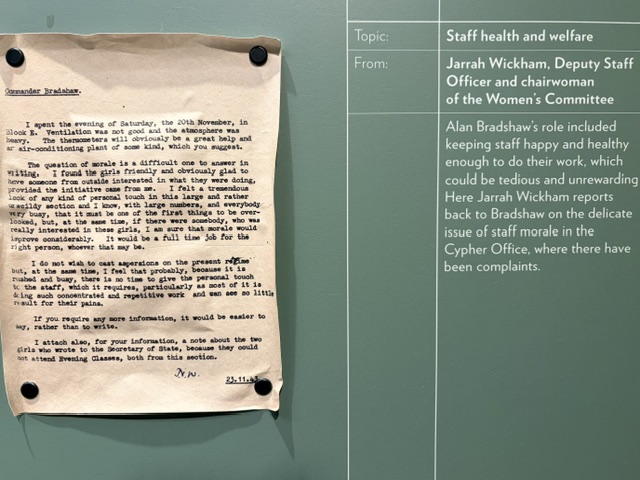
I recently read an internal memo about the conditions in an organisation I was visiting. It described a department with…
Back in the 1960s, psychologist Martin Seligman carried out a now-famous series of experiments on dogs that revealed something both disturbing and deeply insightful about human behaviour.
Dogs were placed in a harness and given mild electric shocks. Some had a lever they could press to stop the shocks. Others had no way to control them.
Later, all the dogs were moved into a pen where escape was simple — they only had to jump over a low barrier. The dogs who’d been able to control the shocks earlier quickly leapt to safety. But the ones that had no control before? They didn’t even try. They lay down and endured the pain, even though freedom was right there in front of them.
This was the first description of learned helplessness: when repeated experiences of powerlessness lead us to stop trying, even when change is possible.

When Helplessness Becomes Identity
I’ve felt this in organisations I’ve worked for before I started my own business. Times when no matter how hard I tried, the system, the culture, or the leadership above me made it feel pointless.
I’ve always been driven by the sense that I can make a positive difference. When this wasn’t something I felt my morale dropped and my motivation drained away.
Worst of all I stopped putting in the effort that I have always been known for.
That’s the insidious thing about learned helplessness – it doesn’t just shape behaviour in the moment. It seeps into identity. Instead of “That situation was difficult”, we begin to believe “I am powerless here.”
The Workplace Echo
Sadly I see the same pattern in many workplaces today:
Over time, this drains not just performance, but also meaning and connection. And it spreads — helplessness is contagious.
The Antidote: Rebuilding Agency
The good news is that helplessness isn’t permanent. Just as it can be learned, it can also be unlearned. Hope can be rebuilt.
The antidote starts small:
Why This Matters to Me
This is why I care so much about culture and leadership. Not because they’re “nice to have,” but because they determine whether people show up with energy, creativity, and hope — or whether they shut down.
This is the kind of work I do every day through Growth Consulting – helping leaders and teams shift from helplessness to hope by creating environments where people thrive. If that’s a challenge you’re facing in your organisation, let’s have a conversation. You can book a call with me here